
January 14 – April 1, 2016
An unblinking look into the way humanity confuses lust and love, goodness and self-righteousness, Measure for Measure explores who sins most in a congregation of murderers, pimps, politicians, whores, nuns, and nobles. Shakespeare’s electrifying exploration of the arrogance of power hovers tantalizingly between comedy and tragedy.

John Harrell in MEASURE FOR MEASURE. Photo by LINDSEY WALTERS. 2016.

Ginna Hoben in MEASURE FOR MEASURE. Photo by LINDSEY WALTERS. 2016.

Chris Johnston and Benjamin Reed in MEASURE FOR MEASURE. Photo by LINDSEY WALTERS. 2016.

Ginna Hoben, Aidan O'Reilly, and Jonathan Holtzman in MEASURE FOR MEASURE. Photo by LINDSEY WALTERS. 2016.

Allison Glenzer and Jonathan Holtzman in MEASURE FOR MEASURE. Photo by LINDSEY WALTERS. 2016.

John Harrell and Lauren Ballard in MEASURE FOR MEASURE. Photo by LINDSEY WALTERS. 2016.

Allison Glenzer and Benjamin Reed in MEASURE FOR MEASURE. Photo by LINDSEY WALTERS. 2016.

John Harrell, Lexie Braverman, and Allison Glenzer in MEASURE FOR MEASURE. Photo by LINDSEY WALTERS. 2016.

René Thornton, Jr. in MEASURE FOR MEASURE. Photo by LINDSEY WALTERS. 2016.

Allison Glenzer, John Harrell, and Benjamin Reed in MEASURE FOR MEASURE. Photo by LINDSEY WALTERS. 2016.
Cast

PREVIOUSLY WITH ASC: 27 seasons and over 200 roles including Falstaff in Henry IV, Parts 1 & 2; Brutus in Julius Caesar; Iago in Othello; Guildenstern in Rosencrantz and Guildenstern …
Angelo
PREVIOUSLY WITH ASC: Weird Sister, Macduff in Macbeth; Lignière, Bellerose, Carbon in Cyrano de Bergerac; Antipholus of Ephesus in The Comedy of Errors; Pembroke, Spencer Senior in Edward II; Simonides, …

Aidan O’Reilly is an actor and director with the American Shakespeare Center, known for his work on Shakespearean classics.

Benjamin has been a resident company member with the American Shakespeare Center since 2014.

More than 186 roles in 101 productions, including Volumnia in Coriolanus, Olivia in Twelfth Night; Regan in King Lear; Margaret in both Henry VI, Part 1 and Part 2; Isabella in Measure for Measure;…

Lauren has been an actor at the American Shakespeare Center in 32 productions and is currently the Properties Master and Choreographer for the Summer/Fall Season. She has a BA from …

Chris Johnston has over 20 years of theatre experience and more than 120 productions at the American Shakespeare Center.
Mariana
PREVIOUSLY WITH ASC: Francisco, Voltemond, Player Villain in Hamlet; Ursula, Boy in Much Ado About Nothing; Second Scholar, Envy, Friar Frederick, Duchess in Doctor Faustus; Musician in Wittenberg. OTHER THEATRES: …
Lauren has been an actor at the American Shakespeare Center in 32 productions and is currently the Properties Master and Choreographer for the Summer/Fall Season. She has a BA from …
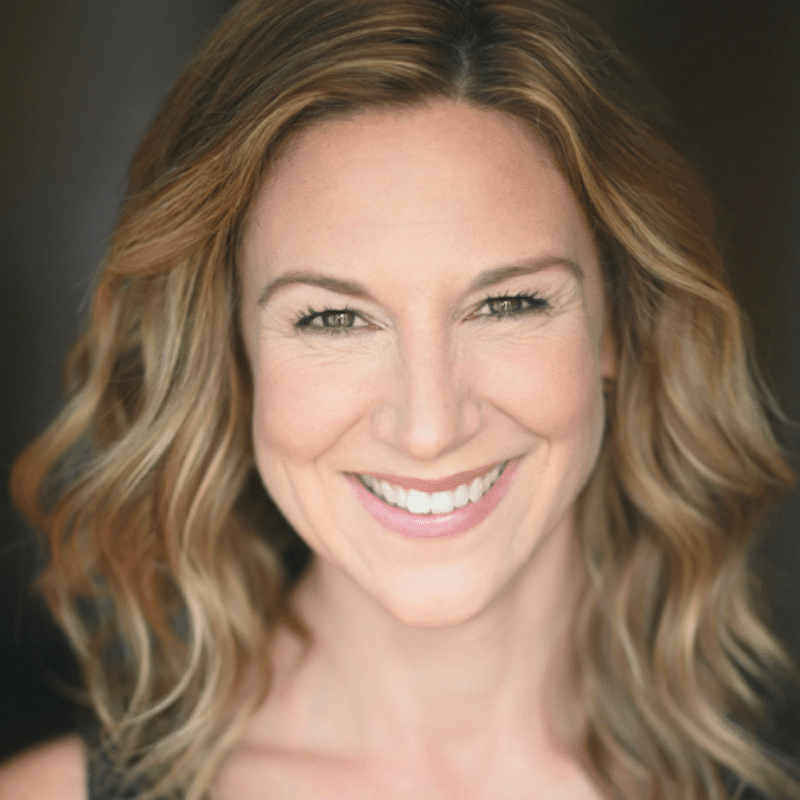
THIS SEASON: Actor in THE COMPLETE WORKS OF WILLIAM SHAKESPEARE (abridged) [revised] (again)
Benjamin has been a resident company member with the American Shakespeare Center since 2014.
Lauren has been an actor at the American Shakespeare Center in 32 productions and is currently the Properties Master and Choreographer for the Summer/Fall Season. She has a BA from …
Provost
PREVIOUSLY WITH ASC: Orlando in As You Like It; Macduff, Bloody Captain in Macbeth; Duke in Measure for Measure. OTHER THEATRES: Jay/Clair de Lune in Mare in the Men’s Room …

PREVIOUSLY WITH ASC: More than 137 roles in 113 productions, including the title roles in Coriolanus; King Lear; Edward II; Timon of Athens; The Merchant of Venice; Pericles; Doctor Faustus; …
Aidan O’Reilly is an actor and director with the American Shakespeare Center, known for his work on Shakespearean classics.
Francisca
PREVIOUSLY WITH ASC: Francisco, Voltemond, Player Villain in Hamlet; Ursula, Boy in Much Ado About Nothing; Second Scholar, Envy, Friar Frederick, Duchess in Doctor Faustus; Musician in Wittenberg. OTHER THEATRES: …
PREVIOUSLY WITH ASC: More than 137 roles in 113 productions, including the title roles in Coriolanus; King Lear; Edward II; Timon of Athens; The Merchant of Venice; Pericles; Doctor Faustus; …
Artistic Team
PREVIOUSLY WITH ASC: 27 seasons and over 200 roles including Falstaff in Henry IV, Parts 1 & 2; Brutus in Julius Caesar; Iago in Othello; Guildenstern in Rosencrantz and Guildenstern …
Stage Manager/Prompter
Lauren is a proud company member of The Keegan Theatre in Washington, DC where she has worked as a stage manager, assistant director and dramaturg. Her Keegan credits include Hair, …
Properties Master
Chris has been designing and building props for the ASC since 2012. In that time, he’s provided props for over 60 productions, including (from Shakespeare): The Merchant of Venice; The Two Gentlemen of Verona; Cymbeline; King John; Love’s Labour’s Lost; Twelfth Night; Julius Caesar; Henry VIII; The Two Noble Kinsmen; Romeo and Juliet; All’s Well That Ends Well; Troilus and Cressida; Othello; The Merry Wives of Windsor; Henry IV, Part 1; As You Like It; Timon of Athens; Macbeth; The Comedy of Errors; Pericles; Hamlet; Much Ado about Nothing; The Taming of the Shrew; Antony and Cleopatra; A Midsummer Night’s Dream; The Winter’s Tale; Henry VI, Parts 1, 2, and 3; Henry V; The Tempest; Measure for Measure; and King Lear.

Jenny McNee joined the ASC in 2002 after studying in Richmond, Charlottesville, and Edinburgh, Scotland. She has designed and built nearly 100 shows (60 resident and touring shows, 35 holiday …
Costume Liaison
Beginning in 2012 as a Costume Shop Intern, Liz Schneider now performs dual duty as Assistant Costume Designer and Costume Liaison for the Actors’ Renaissance Season. Over the past four …
Wardrobe Manager
Molly Beth Seremet holds an M.Litt/MFA in Shakespeare and Performance from Mary Baldwin University and an M.Res in Creative Research from Roehampton University. Recent directing credits include Der Wal: A …
Understudy
This is Symmonie’s seventh season as troupe understudy, having previously understudied more than 300 roles in 29 productions during the 2013, 2014, and 2015 Summer and Fall Seasons, and the …
Stuff that Happens in the play
- The Duke of Vienna, claiming urgent business abroad, leaves control of the city to his deputy Angelo.
- Angelo swiftly restores old laws against sexual depravity, closes the city’s brothels, and arrests fornicators.
- Claudio is immediately arrested and sentenced to death for apparent premarital acts with his pregnant fiancée, Juliet.
- Claudio entreats his friend, Lucio, to find Isabella, Claudio’s sister, and ask her to plead to Angelo for Claudio’s life.
- Though Isabella is about to become a nun, she agrees to petition Angelo.
- The Duke, meanwhile, has disguised himself as a friar in order to observe Angelo’s management of the city.
- Angelo, at first, refuses Isabella’s suit, but then agrees to stay Claudio’s execution — only if Isabella will consent to certain demands.
- Isabella returns to Claudio to tell him of Angelo’s conditions; Claudio asks Isabella to save his life by giving in to Angelo’s requests.
- The Duke, still disguised as a friar, decides to intervene.
- Plots to rescue Isabella’s integrity, save Claudio’s head, and expose treachery ensue.
1. When was the play first performed?
1603 or 1604.
2. Where was the play first performed?
At the Globe, which was situated in one of the areas of London notorious for its brothels, a fact that lends some humor to the pimp Pompey’s statement to the audience that, “I am as well acquainted here as I was in our house of profession; one would think it were Mistress Overdone’s own house, for here be many of her old customers.”
3. How does this play fit into Shakespeare’s career?
Shakespeare writes Measure for Measure after Hamlet, during a period when his plays look intensely and somewhat darkly at sexuality.
4. How is this play like Shakespeare’s other plays?
Measure for Measure is one of three plays (with All’s Well and Troilus and Cressida) that critics classify as “problem” plays. They do so because they find the subject matter in these plays and their outcomes inappropriate to comedy, a reaction that might merely mean the problem is that critics don’t see enough movies by the Coen brothers.
5. How is this play unlike other Shakespeare plays?
In its look at power politics, sexual hypocrisy, and the surveillance state Measure for Measure feels more contemporary than any of the other plays. It’s as if Vladimir Putin, Heidi Fleiss, and Edward Snowden had collaborated on a script for an episode of Orange Is the New Black.
6. What do scholars think about this play?
They admire it and find it a particularly interesting look at London’s underbelly (though the setting is ostensibly Vienna). Editors debate how much of the play might have been written by Middleton, and literary and performance critics debate how to read Isabella’s silence at the end of the play.
7. Does any controversy surround the work?
The play has always been controversial for its sexual content. A Spanish monk who was striking through bawdy lines in Shakespeare’s other plays, faced with all the sexual material in Measure for Measure, simply cut the entire play out of his copy of the Folio. In terms of its stage history, for centuries the play was either adapted into a PG script or ignored altogether.
8. What characters should I especially look for?
Barnadine, the condemned murderer. He only appears once in Act Four, but his illustration of the existential “no” is something that Jean Paul Sartre would be proud to have written.
9. What scene should I especially look for?
Certainly the most immediately disturbing scene is the one in which Angelo asks Isabella for her “love” in exchange for her brother’s life. This kind of “measure for measure” plays its way through the work to emerge – also disturbingly – in the play’s ending.
10. What is the language like?
Dense, rich in euphemism and full of entertaining colloquialism, translated for your theatrical pleasure – as it was for its first audiences – by the talent of actors.